

Live-in care is a home care service that provides 24-hour support from a professional carer in the comfort of your own home. Unlike visiting (domiciliary) care, where support happens during set daily visits, live-in care offers continuous, one-to-one assistance.
It’s a popular choice for older or disabled people who want to stay independent at home while receiving the support they need to remain safe, comfortable and well.

How live-in care works step by step
Live-in care means a trained carer moves into the home to provide personalised, round-the-clock support. Their role is to help with daily tasks, mobility, companionship and anything needed to maintain independence.
Carers from Country Cousins are experienced in supporting people with a wide range of needs, including specific health conditions such as dementia, Parkinson’s or reduced mobility. We match each client with a carer familiar with their circumstances to ensure the right fit.
Because support is one-to-one and fully tailored, live-in care is often more personalised and in many cases more cost-effective – than residential care.
Types of live-in care
Live-in care with sleeping nights
One carer provides care during the day and sleeps at night. They can be woken occasionally for unexpected needs, such as using the toilet. This suits individuals who need regular daytime support but minimal night-time assistance.
Live-in care with waking nights
Two or more carers provide full 24/7 coverage. One supports during the day, while another provides continuous night-time care. This option is ideal for people with complex health needs who require regular support overnight, such as those with advanced dementia or Alzheimer’s.
To learn more, download our Guide to Live-In Care.

Benefits of live-in care
Live-in care offers a wide range of advantages, especially for individuals who want to stay in a familiar, loved home environment.
- Better mental health – Familiar surroundings, routine, pets, and personal belongings support emotional stability and reduce confusion, especially for those living with dementia.
- Improved physical health – Carers encourage activity, prepare nutritious meals and support healthy routines. Companionship also helps maintain cognitive health through conversation and stimulation.
- Enhanced safety and security – With a carer on hand 24/7, individuals with mobility challenges, memory loss or complex conditions receive constant supervision and support.
- One-to-one personalised care – All care is tailored to the individual’s needs, lifestyle and preferences, delivered by a carer carefully matched for experience and personality.
- Round-the-clock support – Knowing help is always at hand provides peace of mind for both the individual and their family.
- Supports independent living – Routine choices remain in the client’s hands, from when to eat to how to structure the day, helping preserve dignity and autonomy.
- Peace of mind for families – A live-in carer monitors wellbeing daily, ensuring concerns are spotted early and communicated clearly.
- Value for money – Although sometimes more expensive than residential care, it provides far higher levels of individualised attention and continuity.
- Companionship and emotional support – Carers offer conversation, reassurance, and social connection, helping reduce loneliness and isolation.
- Flexibility and adaptability – As needs change, care naturally adjusts to match the level of support required.
If you are planning ahead, our guide on How to prepare for a live-in caregiver can help make the transition smoother.
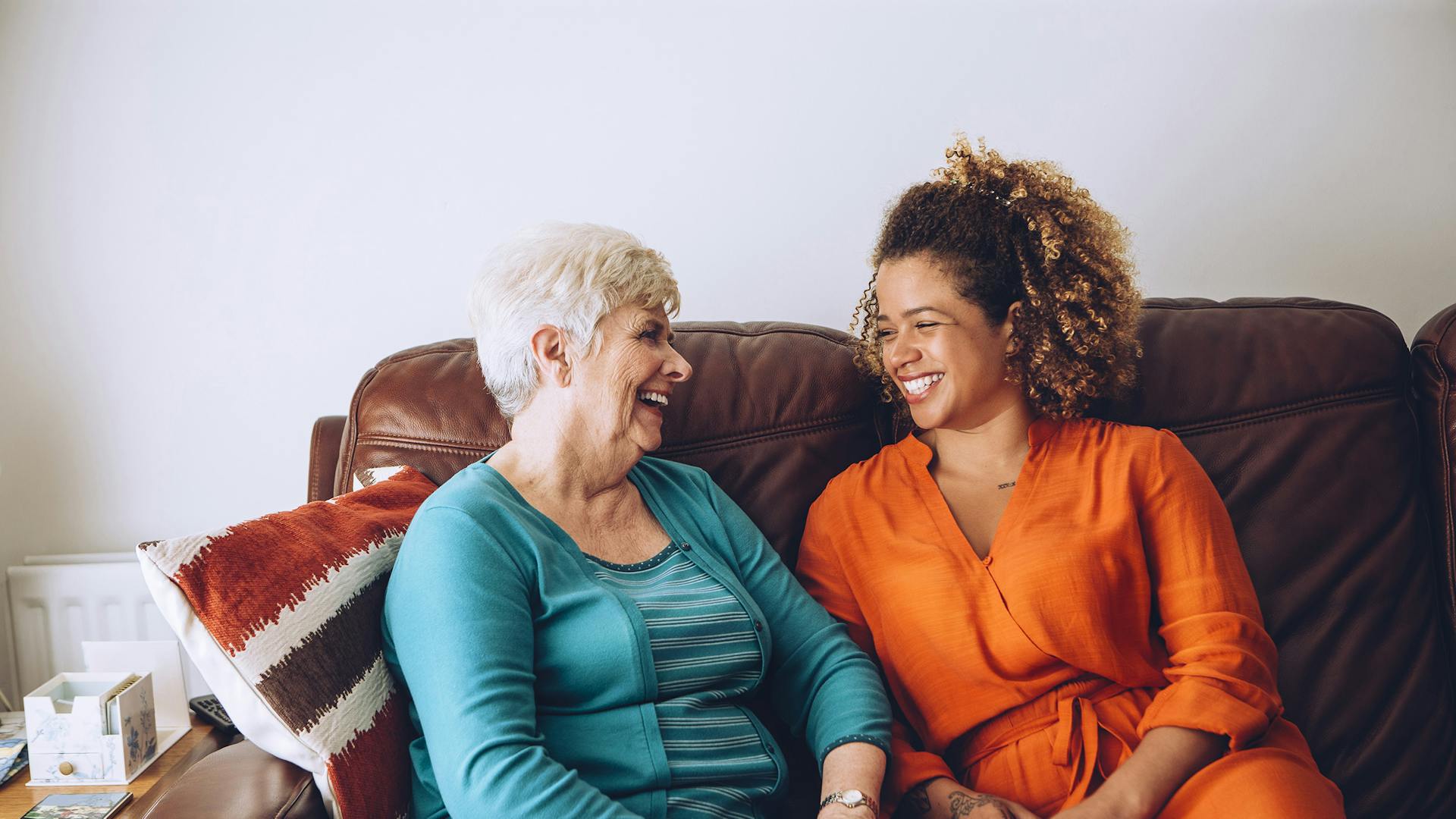
What Is the Role of a Live-In Carer?
A live-in carer supports with a wide range of daily tasks and activities, including:
- Personal care such as washing, dressing and toileting
- Household tasks including cleaning, laundry, tidying and pet care
- Preparing home-cooked meals tailored to dietary needs
- Supporting existing conditions such as dementia, Parkinson’s or cancer
- Mobility support using hoists, wheelchairs and mobility aids
- Running errands, collecting prescriptions, grocery shopping and paying bills
- Companionship, conversation and emotional support
- Social outings, from visits to local shops to attending appointments or walks in the park
Live-in care with Country Cousins
Country Cousins is the UK’s longest-serving introductory live-in care agency, supporting families since 1959. Our carers are carefully matched to each client based on their experience, training and personality. Once we understand your circumstances, we recommend the right type of live-in care and create a completely tailored plan to suit your needs, preferences and cultural requirements.

